
Does your stomach shrink when you lose weight?
I've been working with Janet for over a year. She's still regularly having 100 g of carbs for breakfast and she's only down 5 pounds, so it's been a frustrating situation for everybody involved.
But this past week, we had a breakthrough on a call.
Janet said, "I was out to lunch and only had half of my chicken sandwich, and I felt full. I feel like my stomach is shrinking. Is that something that actually happens when you lose fat?"
As soon as she said it my face lit up, because I knew we were about to connect a dot that could potentially change her life forever.
What about breakfast?
I could have responded to her question in a number of different ways.
I could congratulate her for reducing her portion size, explain whether the stomach actually shrinks when you lose fat, or ask about her total intake for the day. My goal as a coach is always to either encourage or educate.
When she asked this question, I knew immediately where to go. "Well Janet, what did you have for breakfast?"
She said, "I had a protein shake, an egg, and some Greek yogurt."
"JANET!! How much protein was that, and do you think that has anything to do with your reduced hunger at lunch?"
"Oh yeah, about 50 g. Yeah, I think it did!"
Even though I was taking this call driving home from work, I did a backflip right in my seat and put my fist in the air.

Finally, Janet had experienced the power of protein.
Bridging the gap
I've told Janet about 50 times in 50 different ways why eating more protein is a good idea when you're trying to lose fat.
It's nothing you haven't heard me say before either. It reduces hunger, boosts your metabolism, improves recovery from your workouts, and helps you build and hold onto more muscle as you lose fat. As a result, it's easier to eat fewer calories, you lose fat, look more toned, feel better, get healthier, and you're off to the races.
Logically, Janet understood all of that, because I've told her on the phone every week for over 52 weeks now. But it wasn't until she lived it that it fully sank in.
There's a huge difference between understanding something in your mind and seeing it play out in your life. Two Stanford professors, Jeffrey Pfeffer and Robert Sutton, wrote a book on this called The Knowing-Doing Gap, and their big idea is that the gap between not knowing and knowing is way less important than the gap between knowing and doing. One you can solve in an afternoon reading a book, the other can take years of intentional practice and reflection. My most important job as a coach is to help close that gap by connecting those dots.
And here's what blows my mind about Janet's breakthrough:
She connected all of the dots except the most important one. She felt full after half the sandwich, she knew something was changing and she had less hunger, but she went looking for an explanation and landed on, "My stomach must be shrinking." She nailed the result but missed the cause, and if she doesn't know what caused it, she can't repeat it.
That's where coaching comes in
My job in that moment was not to give her more information, she had all the information she needed. It was to point at what just happened and say, look, THIS is what caused that.
Notice I didn't tell her the answer, I asked her what she had for breakfast. That's extremely important, because people believe their own conclusions far more than they believe their coach's, no matter how many times the coach has said it (trust me!).
Over the course of one high-protein breakfast and half a chicken sandwich, Janet went from someone who'd been told a hundred times to eat more protein to someone who fully understands why that habit matters so much for her goals. Now that she's made that connection, the likelihood of that habit sticking long term has gone up by about a hundred times.
Now when she wakes up tomorrow, she's not going to think she's less hungry at lunch because her stomach shrank, which would put all the power in factors she can't control. She's going to think, “Okay, if I have another 50 grams of protein for breakfast, I'm going to have a much easier time controlling my cravings later in the day.”
Boom.
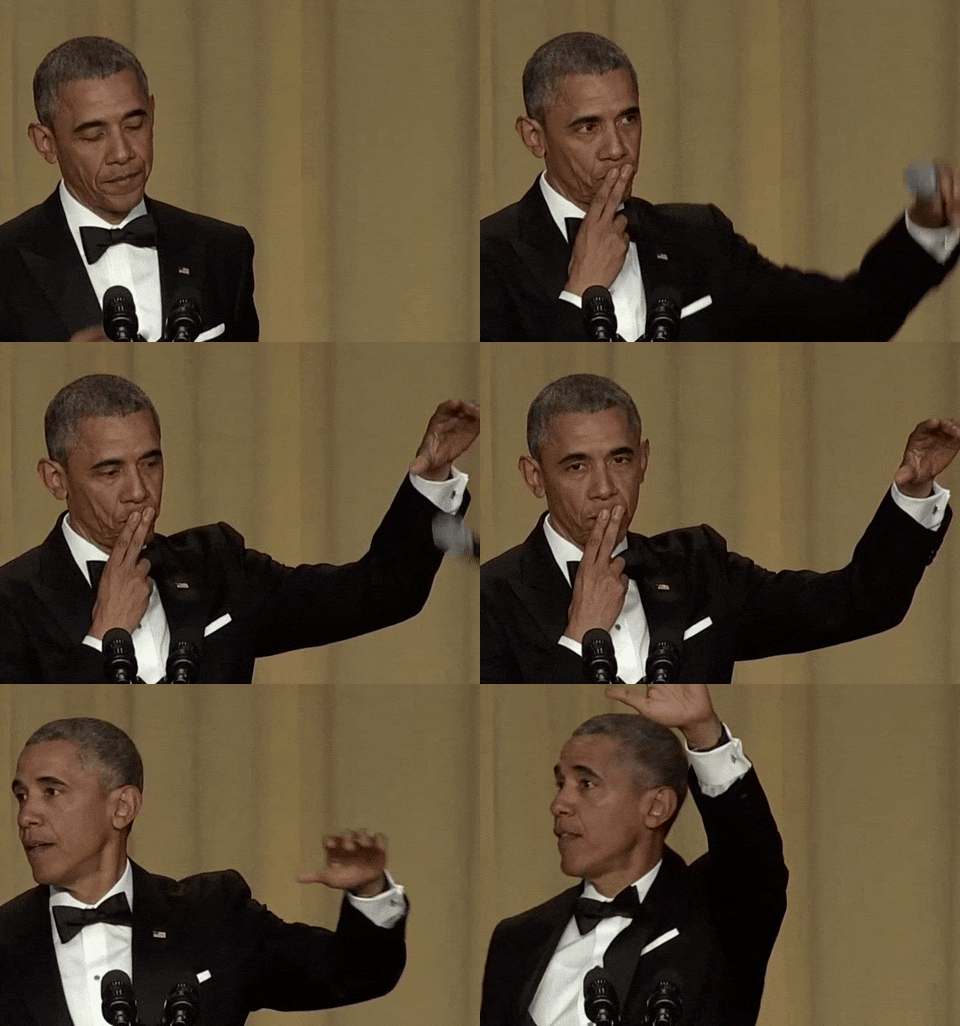
Does your stomach really shrink when you lose fat?
Real quick, for those of you who clicked on this article because of the headline and want to know what's actually happening physiologically, here's the answer:
Your stomach doesn't shrink the way fat does. It's a muscular, stretchy organ, so eating less doesn't make it physically waste away.
But it DOES adapt to what you feed it. In one small 1996 study by Geliebter and colleagues, about four weeks of eating less reduced how much the stomach could comfortably hold by roughly a quarter to a third.
Your stomach has stretch receptors that tell your brain when you're full, so when you get used to smaller meals, those signals kick in sooner and smaller portions start to feel normal. The opposite is true too, people who regularly overeat tend to have stomachs that hold more.
If you're losing fat around your midsection, your belly is literally getting smaller, and a lot of people mix that up with their stomach shrinking.
Your hunger hormones don't always cooperate. When you lose weight, the hormone that drives hunger tends to go up and the one that signals fullness tends to go down, which means you might feel full faster at meals but still get hungry between them (and that's exactly why protein is so key).
So we're not exactly sure, but it seems like your stomach may "shrink" in the sense that it adapts to how much you eat.
The bigger takeaway is that what's happening physiologically is far less important than what's happening behaviorally and psychologically. Janet didn't feel full at lunch because of some change she had no control over, she felt full because of a decision she made at breakfast, and that's a decision she can make again tomorrow.
Billionaires with perfect abs
This past week I shared one of my favorite quotes on Instagram, from Derek Sivers: "If more information was the answer, then we'd all be billionaires with perfect abs."
I love this quote because it cuts through the idea that knowledge equals effective implementation like a hot knife through butter. If you're trying to lose fat, you can read about protein, calories, strength training, hormones, whatever the heck, until you're blue in the face for decades, but until you figure out how to apply it in your life consistently, nothing is going to change.
And I don't want you to think I'm above this, because I do the same exact thing with business instead of fitness. I can listen to podcasts and read 10 books on business/marketing, and it feels productive, I feel like I'm learning, and maybe I am. But until I take action, nothing changes in my business. This is especially dangerous because when I listen to a fantasy football podcast, I know I'm not doing anything to help my business. When I listen to a business podcast, I feel like I am, but I'm actually doing nothing unless it leads to action and consistency with those actions. James Clear calls this the difference between motion and action, and motion is sneaky because it feels like progress.
Key takeaway: knowing is not the same as doing, and bridging the gap between knowing and doing is the only - I repeat, only! - thing that will get you closer to your goals.
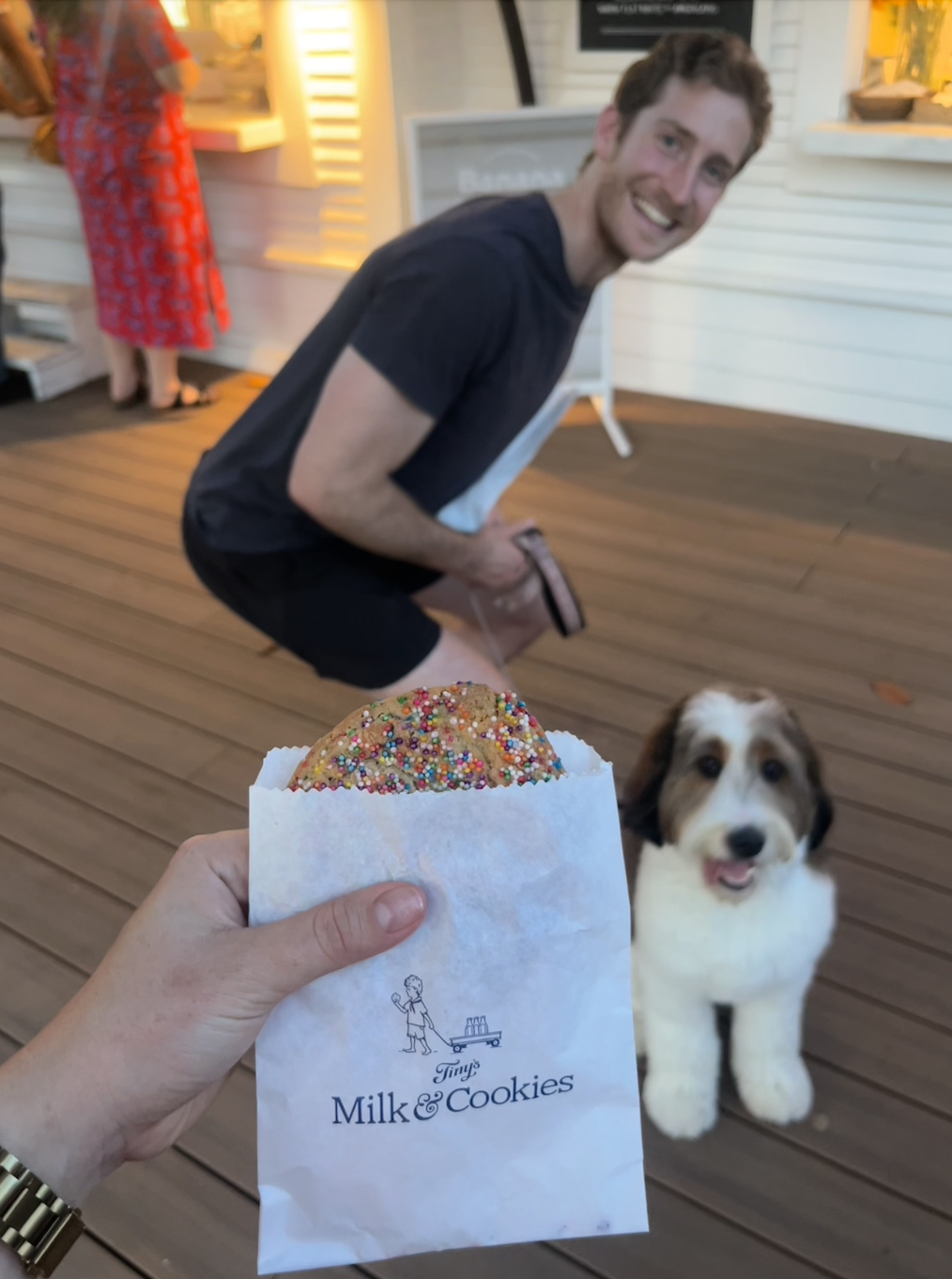
Well, I've gotta go take Mabel out to go potty. But if you need a hand bridging the gap between knowing and doing and want to take your fitness to the next level, hit me up anytime.
Best,
John
P.S. It’s all sprinkles and smiles until she’s shrieking at 4:30 the next morning.

3 Steps You Can Take
Apply for coaching - If you’re ready to start, you can fill out a coaching application here (it takes 90 seconds or less). Best case, you change your life. Worst case, I’ll help you draw up a road map to get closer to your goals.
Sign up for my newsletter - If you’d like to hear more, sign up for my mailing list here.
Keep learning - You can check out my other articles here. Nobody asked me to, but I’ve spent a ton of time researching everything from artificial sweeteners to saturated fat to testosterone and more, so you don’t have to.
