
How To Feel And Look Better In 90 Days (Even If You Were Born Before 1985)
If you were born before 1985, you have joint pain, and you want to lose 10-20 pounds in the next 90 days, keep reading.
I'm going to share four changes that will make you feel radically better. And I'll show you how to do each one.
But first, indulge me in a fantasy.
It's June 15th. Your family wants to go to the pool. Three months ago, you'd have hesitated. Belly a bit soft. Shoulders barking when you swim. Maybe you'd find an excuse to stay on the deck chair.
But today you don't think twice.
Since March 15th, you're down 15 pounds. Your belly has visibly shrunk (no GLPs required). You've added muscle you can actually see. Your joints don't ache. Instead of dreading the pool, you're looking forward to gliding through the water and splashing your family.
Here's how to get there.
1. Why Strength Training Over 40 Protects Your Joints (Not Destroys Them)
I know. You read "heavy strength training" and your knee started aching preemptively. That's the number one mistake I see from people over 40 trying to get in shape. They avoid the single most protective thing they could do for their joints because someone told them it's dangerous.
The opposite is true!
A 2024 meta-analysis in the Journal of Clinical Medicine examined 27 studies, over 1,700 participants with knee and hip osteoarthritis. Resistance training significantly reduced pain, improved physical function, and increased strength across both joints. The mechanism is simple: your quadriceps and surrounding musculature act as shock absorbers. When those muscles are weak, the passive structures (cartilage, ligaments, meniscus) take the brunt of every step, squat, and staircase.
Stronger muscles, less joint stress.
Here's the kicker. A study in Arthritis & Rheumatology tracked 2,600 adults (average age 64) for eight years. Strength trainers had 20% lower rates of knee osteoarthritis. And people who started after age 50 saw similar protective benefits to those who started earlier.
It is not too late.
It gets better. Resistance training is also one of the most effective tools for preventing osteoporosis. When you load muscles against resistance, the mechanical tension doesn't just build muscle. It signals your bones to get denser. It's the only intervention that simultaneously improves muscle mass, bone density, strength, AND balance.
No pill does all four.
This won't make you look like Rocky or Arnold. That takes decades and a hearty dose of roids in your butt.
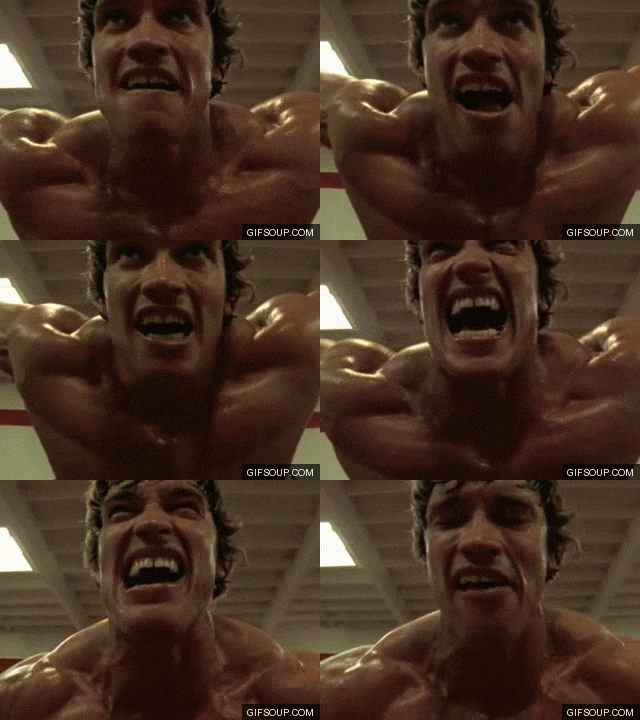
Well-designed strength training will give you noticeable results in 4-6 weeks and visible changes in muscle tone within 3 months.
That's step one. If you want a strength program designed around your specific joints, your schedule, and your goals, that's what my coaching does.
But to get the most out of your training, you need to eat enough protein.
2. Why Protein Matters More After 40 (And How Much You Need)
You're old. Don't blame me! These are the facts.
Because you're old, protein is critical. Red alert, top priority. It's important for everyone, but even more so for older adults because of something called "anabolic resistance."
Here's what that looks like.
When a 25-year-old eats a chicken breast, their muscles respond like a sponge, soaking up amino acids and churning out new muscle protein. When YOU eat the same chicken breast? Your muscles shrug. They respond, but slower, weaker, and with less enthusiasm. That blunted response is anabolic resistance, and it's been well-documented in the research.
A landmark study published in PLOS ONE compared young men (average age 22) to older men (average age 75) and found that post-meal muscle protein synthesis rates were 16% lower in the older group. And the older men's muscles were more than three times less responsive to the protein they ate.
If you’re over the age of 50, the game has changed and you need to play it differently.
And the fix is pretty simple, actually: eat more protein per meal.
The blunted response appears to be dose-dependent. Throw enough high-quality protein at your muscles and they WILL respond. But "enough" for you is more than it is for your 30-year-old coworker. The research supports 0.7-1.0 grams per pound of body weight per day, distributed across meals. Minimum: 0.8g/lb.
If you're trying to lose fat while preserving muscle, hitting that number is the single most important lever you have to make sure the weight you lose comes from your gut, not your biceps.
I've written extensively about this. High protein foods. Why it matters. High protein breakfasts.
But for fat loss, protein takes second place. First place goes to…
3. The Only Thing That Actually Drives Fat Loss After 40
I almost threw my phone out the window Friday night.
I was on a call with my client, Jennifer. She said, "I feel like my metabolism is just slower than most people's. I have one fried chicken sandwich with fries and the scale jumps up. I'm trying to make conscious choices, but it's just not going down."
"JENNIFER!!!! PROTEIN AND CALORIES. PROTEIN AND CALORIES. I'm going to keep beating that drum until it sinks in.”
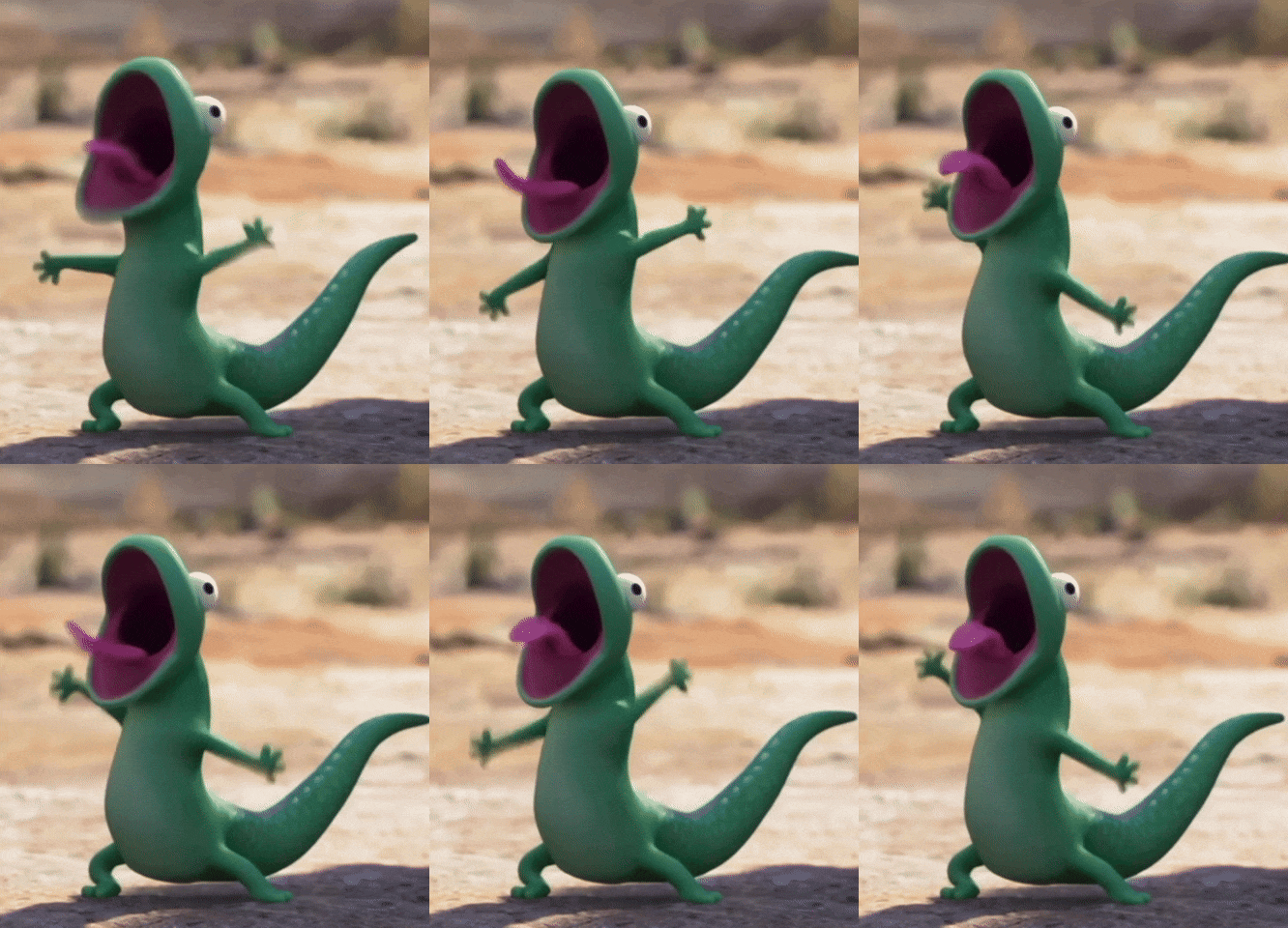
This was me.
I actually raised my voice.
We've covered this SO many times. It's like me telling a financial advisor, "I want to increase my net worth, but my friend makes twice as much as me, so it's really hard."
Maybe my friend Eric makes bank as a lawyer. That doesn't change the fact that I can save half my income, invest the difference, and do really well regardless.
Focusing on Eric doesn't help me at all!
Here's the deal. A study in Annals of Nutrition and Metabolism titled (I love this) "Fat loss depends on energy deficit only, independently of the method for weight loss" compared two groups of women. One group dieted. The other dieted plus exercised. Same calorie deficit. Same fat loss.
The method didn't matter! It all came down to the calorie deficit.
A comprehensive review in the Journal of Obesity & Metabolic Syndrome confirms what every well-conducted trial has shown: energy deficit is THE most important factor for weight loss. Not the type of diet. Not meal timing. Not whether you're keto, carnivore, vegan, or Mediterranean.
Calories in vs. calories out is the foundation everything else sits on.
Now here's where it gets nuanced.
When you're in a caloric deficit, your body doesn't just burn fat. It will happily chew through muscle tissue too, especially if you're not giving it a reason to keep that muscle around. Strength training provides that reason. Adequate protein provides the raw materials. Together, they tell your body: burn the fat, leave the muscle alone.
Without both? You'll lose weight. But you'll lose the wrong kind.
If you want to be 15-20 pounds leaner at the pool on June 15th, this is priority number one.
But if you want to pull a lever that turns fat loss from a grind into riding a bike downhill with the wind at your back, that comes down to number four.
4. How Sleep Impacts Fat Loss, Testosterone, and Joint Pain After 40
I know. You're at the peak of your career. You have 47 unread emails. This sounds ridiculous.
But if I could reach through the screen, grab you by the shirt collar, and shake you, I would.
Sleep is the highest-leverage thing on this list. It makes your joints feel better, makes you leaner, and improves every biomarker you're tracking on that Oura ring. And you're probably treating it like it's optional.
It's not!
A University of Chicago study put 10 overweight adults on the exact same calorie-restricted diet under two conditions: 8.5 hours of sleep vs. 5.5 hours. Same people, food, and calories. Only difference was sleep.
At 8.5 hours, over half the weight they lost was fat. At 5.5 hours, fat loss dropped by 55%. Same total weight lost. WAY more of it was muscle.
The sleep-restricted group also had higher ghrelin levels, the hormone that screams "I'M HUNGRY, FEED ME," making the diet dramatically harder to stick to.
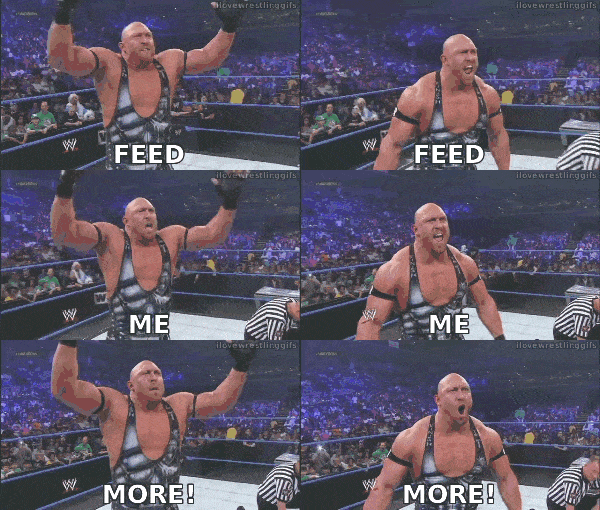
The study director put it perfectly: cutting back on sleep is like poking sticks in your bicycle wheels.
The hormonal damage goes beyond appetite, too.
A study in JAMA found that healthy young men who slept less than 5 hours per night for just one week saw testosterone drop 10-15%. The researchers noted this decline is equivalent to aging 10-15 YEARS. And you probably know this, but testosterone is critical for building muscle, maintaining bone density, and sustaining the drive that got you where you are in your career.
Every night you stay up late answering emails, you are actively sabotaging all three.
Then there's your joints. Sleep deprivation increases systemic inflammation. Elevated C-reactive protein, interleukin-6, pro-inflammatory cytokines. All the markers that make your knees, shoulders, and back feel like they aged a decade overnight. During deep sleep, your body suppresses cortisol and ramps up growth hormone, creating the conditions for tissue repair and inflammation control.
Skip that window and you're asking your joints to recover with one hand tied behind their back.
Sleep is boring, I get it. But it's one of those levers where the older you get, the more it matters.
If you want to shock your family in your swimsuit on June 15th, put your phone down and get some freakin' sleep.
This Is Your Window
You've worked hard your entire life. Saved for retirement. Built something real. You have 2-3 decades ahead of you, and those decades go one of two ways.
Struggle through them with pain, extra weight, and a quiet "what if" you never shake.
Or get your sh*t together now and actually LIVE.
My over-forty summer fat loss cohort starts March 15th. Three months that will dramatically change the trajectory of your health for the rest of your life.
And if I'm wrong? If you're not absolutely thrilled with the coaching after one month, you get a full refund and I'll pay you an additional $300 out of my own pocket. That's how confident I am in what this does!
Best,
John
Sources
Kim, S.H. et al. "The Effects of Resistance Training on Pain, Strength, and Function in Osteoarthritis: Systematic Review and Meta-Analysis." Journal of Clinical Medicine, 2024. PMC11676110.
Lu, M. et al. "Association of Strength Training With Knee Osteoarthritis and Knee Pain." Arthritis & Rheumatology, 2023. Reported by Harvard Health, Feb 2024.
Layne, J.E. & Nelson, M.E. "The Effects of Progressive Resistance Training on Bone Density: A Review." Medicine & Science in Sports & Exercise, 1999. PMID: 9927006.
Gorissen, S.H. et al. "Aging Is Accompanied by a Blunted Muscle Protein Synthetic Response to Protein Ingestion." PLOS ONE, 2015. doi: 10.1371/journal.pone.0140903.
Burd, N.A., Gorissen, S.H., & Van Loon, L.J.C. "Anabolic Resistance of Muscle Protein Synthesis with Aging." Exercise and Sport Sciences Reviews, 2013; 41(3): 169-173.
Strasser, B., Spreitzer, A. & Haber, P. "Fat Loss Depends on Energy Deficit Only, Independently of the Method for Weight Loss." Annals of Nutrition and Metabolism, 2007; 51(5): 428-432. PMID: 18025815.
Kim, J.Y. "Optimal Diet Strategies for Weight Loss and Weight Loss Maintenance." Journal of Obesity & Metabolic Syndrome, 2021; 30(1): 20-31. PMID: 33107442.
Nedeltcheva, A.V. et al. "Insufficient Sleep Undermines Dietary Efforts to Reduce Adiposity." Annals of Internal Medicine, 2010; 153(7): 435-441. PMID: 20921542.
Leproult, R. & Van Cauter, E. "Effect of 1 Week of Sleep Restriction on Testosterone Levels in Young Healthy Men." JAMA, 2011; 305(21): 2173-2174. PMID: 21632481.
"How Sleep Deprivation Can Cause Inflammation." Harvard Health Publishing, Harvard Medical School, 2025.
3 Steps You Can Take
Apply for coaching - If you’re ready to start, you can fill out a coaching application here (it takes 90 seconds or less). Best case, you change your life. Worst case, I’ll help you draw up a road map to get closer to your goals.
Sign up for my newsletter - If you’d like to hear more, sign up for my mailing list here.
Keep learning - You can check out my other articles here. Nobody asked me to, but I’ve spent a ton of time researching everything from artificial sweeteners to saturated fat to testosterone and more, so you don’t have to.
